
There’s a pattern I see over and over again.
Someone finally decides to start exercising again.
They’re motivated. Fired up. Ready to “do it right this time.”
So they go all in.
5 workouts a week.
Hard sessions.
No missed days.
No shortcuts.
And for a short time, it works.
Then real life shows up.
Schedules get busy.
Energy drops.
A joint starts bothering them.
Stress piles up.
They miss a few workouts… feel discouraged… and eventually stop altogether.
Weeks go by.
Sometimes months.
Until they finally build up the courage to try again — and the cycle repeats.
This isn’t a motivation problem.
It’s a strategy problem.
The Real Issue: We Demand Perfection From Ourselves
One of the most common thoughts I hear from people starting fitness is:
“If I can’t work out 5 times a week every week, it’s not even worth trying.”
That mindset sounds disciplined, but it’s actually the fastest path to burnout.
Because when perfection is the standard:
- One missed workout feels like failure
- One bad week feels like starting over
- And anything less than “all in” feels pointless
That’s not how long-term fitness is built.
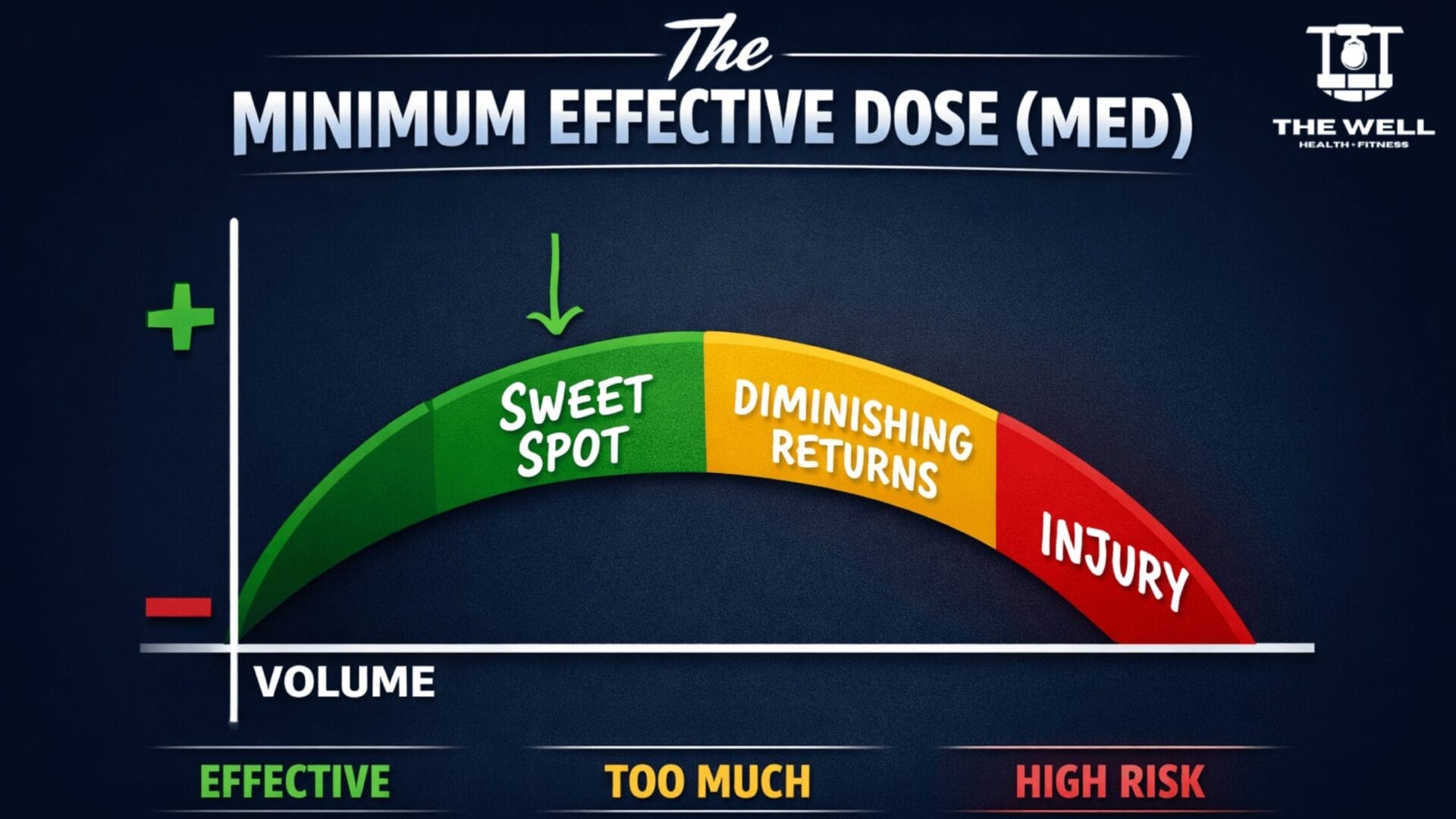
What Actually Works: The Minimum Effective Dose
There’s a concept we use in coaching called the Minimum Effective Dose.
It means:
The smallest amount of training that creates positive change — without burning you out or breaking you down.
Not the hardest plan.
Not the most workouts.
Just enough stress to adapt… and recover… and repeat.
This is where real consistency lives.
What Successful Members Actually Do
Here’s something most people find surprising.
Some of our most successful members started with this exact question:
“Hey, I’d like to start coming 2x per week. Is that enough?”
And the answer is always: yes.
Because here’s what happens next:
- They show up consistently
- They don’t feel overwhelmed
- Their body adapts instead of breaking down
- Confidence builds
- Momentum grows
Fast forward a few months and now they’re:
- Averaging 3–4 workouts per week
- Stronger than they’ve been in years
- More consistent than ever before
Not because they forced it — but because they earned it.
Some weeks they train twice.
Some weeks three times.
Some weeks once.
But zoom out over months, and they’re moving far more than the average person — and staying injury-free.
Tactical Action Steps You Can Use Right Now
Here’s how to apply this starting today.
1. Pick a “Floor,” Not a “Ceiling”
Stop asking, “What’s the most I can do?”
Start asking, “What’s the minimum I can commit to no matter what?”
For most people, that’s:
- 2 workouts per week
- Scheduled on specific days
- Treated as non-negotiable appointments
Anything beyond that is a bonus.
2. Lower the Bar on Purpose
This is key.
Your workouts don’t need to:
- Leave you sore for days
- Feel heroic
- Exhaust you completely
They need to be repeatable.
Walking out feeling “I could do that again tomorrow” is a good thing — not a failure.
3. Allow Weekly Flexibility (Without Guilt)
Real life isn’t consistent week to week — and your plan shouldn’t pretend it is.
Some weeks:
- You’ll train 3 times
Other weeks: - You’ll train once
That’s normal.
Consistency is measured over months, not perfect weeks.
4. Track Streaks, Not Perfection
Instead of asking:
- “Did I hit every workout?”
Ask:
- “Did I keep showing up?”
Momentum comes from staying in the game — not winning every week.
5. Silence the Perfection Voice
When that voice says:
“If you can’t do it perfectly, don’t bother.”
Answer it with:
“Progress beats perfection — every time.”
Then take the next small action anyway.
The Goal Isn’t Max Effort — It’s Staying in Motion
The people who succeed in fitness long-term aren’t the ones who train the hardest.
They’re the ones who:
- Adjust instead of quitting
- Do what’s sustainable, not impressive
- Stay consistent when life gets busy
If fitness has felt like a cycle of starting and stopping, this is your permission slip to do less — and finally make it stick.
Tell perfection to take a hike.
Build momentum instead.
If you want some help getting started, book an Intro Meeting today!


